
What you will learn
On this pageContentsCloseOpen
Three organizations get to tell you how to run reviews on a Shopify store: the Federal Trade Commission, Google, and Shopify. Each has published its rules. The rules do not agree — and the single clearest disagreement is about the one feature every review app puts on its pricing page.
Rules, settings, pricing and ratings were verified against the FTC's own rule text and staff guidance, Google Merchant Center Help, the Shopify Help Center, shopify.dev, the five vendors' help centers, and the en-US Shopify App Store on September 11, 2026. All prices are in USD.
The short version
- The FTC rule bans incentives for reviews only when the incentive is conditioned, expressly or by implication, on a particular sentiment. An unconditional discount-for-review is not a rule violation.
- Google allows incentivized reviews in Product Ratings, but requires you to declare them with the
is_incentivized_reviewattribute and to send all reviews, including low-star ones. - Shopify's Shop product reviews guidelines say plainly: "You shouldn't offer compensation in exchange for reviews. This includes money, discounts, free products, or refunds."
- Shopify names exactly five partner apps whose reviews can display in Shop: Judge.me, Loox, Okendo, Stamped.io and Yotpo. All five ship a reward-for-review feature.
- "Auto-publish 4 stars and up" does not withhold your 1-star reviews. In all five apps it delays them, up to a documented ceiling of 14 days, after which they publish themselves.
- Hiding a review removes it from your storefront average. It does not necessarily remove it from your Google Shopping feed or from the metaobjects in your own store.
Rulebook 1: the FTC rule is narrower than merchants think
The Rule on the Use of Consumer Reviews and Testimonials, 16 CFR Part 465, took effect October 21, 2024. Most ecommerce coverage treats it as a general ban on paying for reviews. Read § 465.4 and it is considerably more specific:
It is an unfair or deceptive act or practice ... for a business to provide compensation or other incentives in exchange for, or conditioned expressly or by implication on, the writing or creation of consumer reviews expressing a particular sentiment, whether positive or negative.
The operative words are "expressing a particular sentiment." FTC staff confirm the reading in their published Q&A: "The rule does not prohibit giving incentives for reviews, as long as there isn't an express or implied requirement that the reviews have to express a particular sentiment. But remember that failing to disclose incentives could be a violation of the FTC Act."
Two follow-ups in that same Q&A draw the line precisely. Paying for 5-star reviews is prohibited even if the reviewer discloses the payment — staff answer that question with a one-word "No." And the implication test catches wording, not just terms: staff give "Tell us how much you loved your visit to John's Steakhouse and get a $5 coupon" as an example of an offer that implies the review must be positive.
Suppression works the same way. § 465.7(b) does not ban filtering by rating outright. It bans materially misrepresenting that the reviews you display "represent most or all the reviews submitted" while you are withholding reviews based on rating or negative sentiment — with carve-outs for criteria "applied equally to all reviews submitted without regard to sentiment," such as fake reviews, personal information, or content wholly unrelated to what you sell.
That distinction matters more than it sounds, because a review widget's job is to publish an aggregate: 4.8, based on 1,204 reviews. That line is the representation. The rating filter is what makes it false.
Two practices sit outside the rule but inside the FTC Act. Default-sorting 5-star reviews to the top is "not covered" by the rule, staff say, though doing it in a way "that makes it difficult for consumers to know about or find negative reviews" can still violate Section 5. Asking for reviews only from customers you expect to be happy gets the same treatment: "The rule does not contain a specific prohibition against such conduct. But this practice could violate the FTC Act."
For scale, the FTC's most recent published inflation adjustment, effective January 17, 2025, set the maximum civil penalty for Section 5(l) and 5(m)(1) violations at $53,088 per violation.
Rulebook 2: Google will take your incentivized reviews, if you label them
If you syndicate reviews to Google Shopping, Google's Product Ratings policies apply on top. Google's position on incentives is permissive but mechanical:
We may display reviews that have been obtained through incentives, such as gift cards or discounts. However, these incentives cannot be dependent on the sentiment of the review. If you provide an incentive for a review, you are required to use the
<is_incentivized_review>attribute in your feed to properly disclose it.
Google is stricter than the FTC on completeness. "You are required to share all your product reviews with Google, including low-star reviews," the policy says, adding: "You may not delete old reviews from the feed." Participation also needs a minimum of 50 reviews, and a feed that stops refreshing monthly goes stale and loses eligibility. (For how product ratings differ from seller ratings, see Shopify Google seller ratings vs product ratings.)
So under Google's rules, a discount-for-review program is legal and a rating filter on the feed is not.
Rulebook 3: Shopify's Shop guidelines ban the incentive outright
Now open the Shop product reviews guidelines and requirements in the Shopify Help Center. Among the merchant guidelines, in a bulleted list with no qualifiers:
You shouldn't offer compensation in exchange for reviews. This includes money, discounts, free products, or refunds.
There is no sentiment condition, no disclosure exception, and no dollar threshold. The adjacent bullets say you shouldn't solicit positive reviews, and shouldn't incentivize a customer to change or remove a review they already left. Shopify adds that if you don't follow the guidelines, "Shop may take appropriate action depending on the severity and number of violations."
This is the strictest of the three rulebooks, and it is the one that governs a surface most merchants never configure deliberately. It applies because your review app pushes reviews into Shop.
The five apps are not our shortlist — they are Shopify's
Shopify's page on syncing Shop product reviews with partner apps names the supported apps: Judge.me, Loox, Okendo, Stamped.io, Yotpo. That is the entire list. Under the hood, shopify.dev's standard product review metaobject documentation states the program's condition: "all valid reviews must be syndicated to product review metaobjects and all total review counts and average star ratings must be syndicated to product review metafields." Those metafields — reviews.rating and reviews.rating_count — "aren't visible in the Shopify Admin" and "aren't editable by merchants."
Here is where each app puts the reward engine, with App Store figures retrieved September 11, 2026.
| App | Rating (reviews) | Entry price | Where the reward-for-review feature sits |
|---|---|---|---|
| Judge.me Product Reviews App | 5.0 (46,744) | Forever Free; Awesome $15/month | "Coupons & Referrals" — Awesome plan |
| Loox ‑ Product Reviews App | 4.9 (9,581) | Beginner free to 500 orders; Convert $49.99/month | "Offer discounts for photo reviews" — Beginner (free) plan |
| Okendo: Reviews & Loyalty | 4.8 (1,422) | Free to 50 orders/month; Essential $19/month | "Review Rewards Engine" — Free plan |
| Stamped Reviews & Loyalty | 4.7 (3,756) | From $23/month (200 orders) | Coupons for four review actions — "available on any paid plan" |
| Yotpo: Product Reviews App | 4.8 (4,635) | Free to 50 monthly orders; Starter $15/month | Discount email after writing or sharing a review — Starter and above |
Judge.me and Loox display the Built for Shopify badge on their listings; Okendo, Stamped and Yotpo did not on the date checked.
Two of the implementations carry conditions worth knowing before you switch them on. Stamped's coupon feature distributes codes "only to verified reviews," limits you to one coupon per order, and rewards four separate actions — write a review, add photos, add videos, share. Yotpo's discount email adds a boundary the other apps do not mention: "Due to Google seller rating requirements, you can offer coupons to customers as an incentive only for submitting product reviews, and not for site reviews." That is a fourth rulebook, applying to a different review type, inside the same app.
The Loox line is the one to sit with. Loox's Beginner plan is free, and its published feature list includes both "Offer discounts for photo reviews" and "Shop app syndication." A merchant can enable the practice Shopify's guidelines prohibit and the destination those guidelines govern, on the same free plan, in the same afternoon, without either screen mentioning the other.
"Auto-publish 4 stars and up" is a delay, not a filter
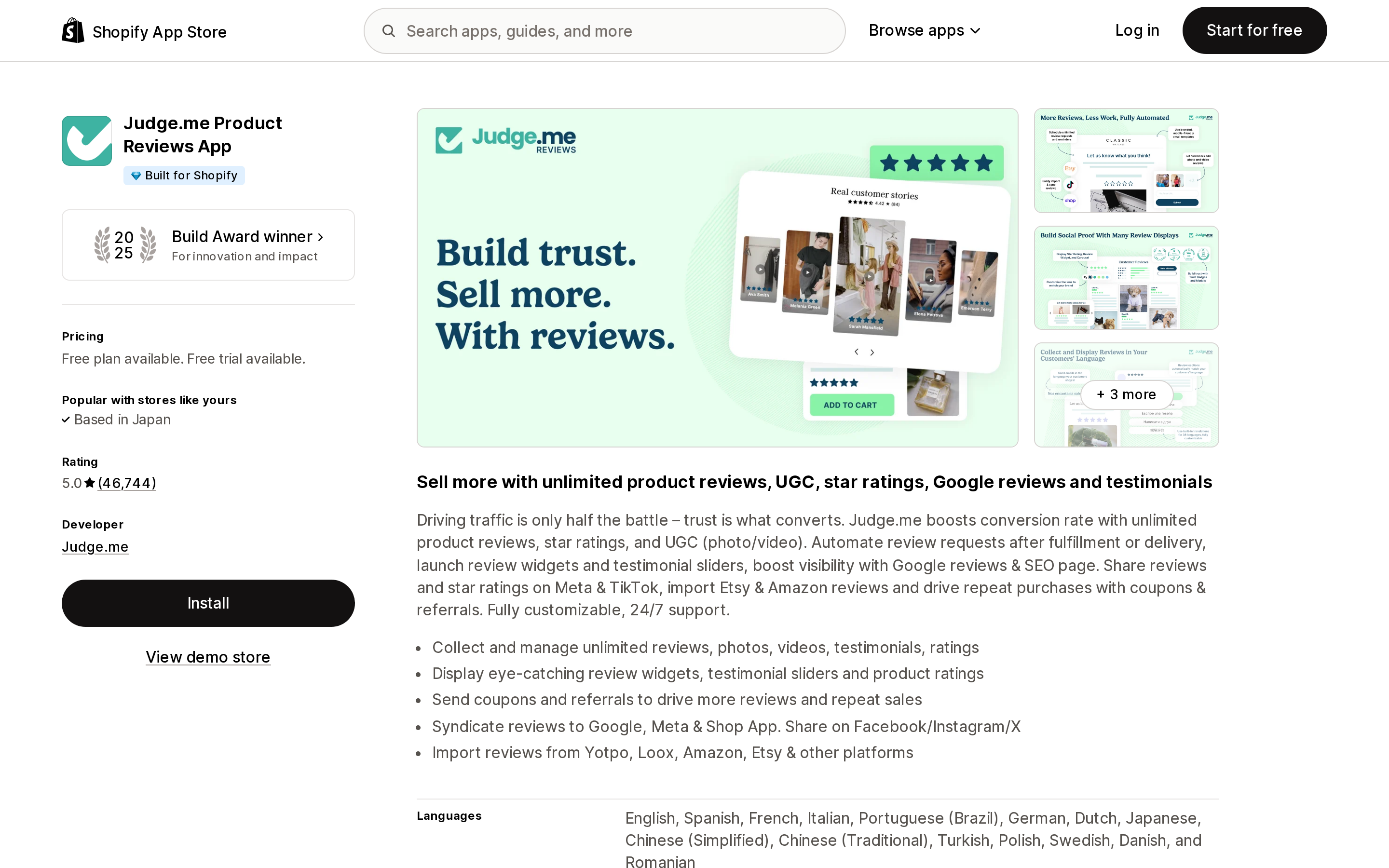
Source: Shopify App Store (Judge.me Product Reviews App), retrieved September 11, 2026
Every one of the five offers a setting that looks like it will keep low ratings off your product pages. None of them actually does.
Judge.me publishes all reviews automatically by default. On the $15 Awesome plan you can narrow that to "At least 2 stars," "At least 3 stars," "At least 4 stars," or "At least 5 stars," and separately to sentiment — "Neutral and positive" or "Positive only." Reviews that miss the criteria go to Pending. Then, in Judge.me's own words: "To comply with Shopify's regulations: From the time the review is submitted, you have 14 days to change the status of the Pending review to either Published or Hidden. After 14 days, Pending reviews that are not moderated will be published automatically." One quirk: the sentiment rules only apply when the store's primary language is English.
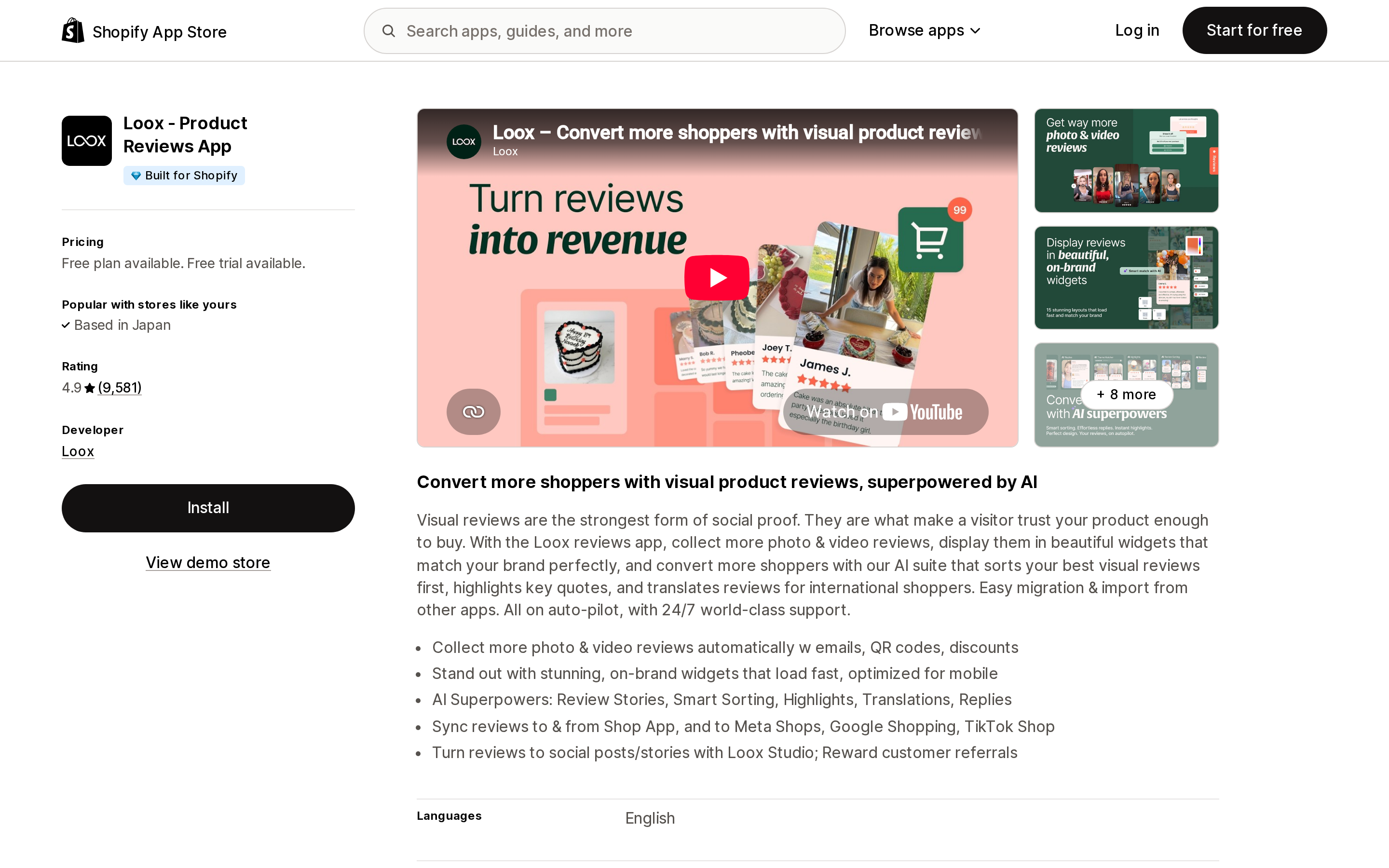
Source: Shopify App Store (Loox ‑ Product Reviews App), retrieved September 11, 2026
Loox offers All reviews, "3-5 Stars and up," "4 stars and up," "5 stars only," or a blanket 14-day hold, and states the constraint as a requirement rather than a recommendation: "It's required to auto-publish all reviews that are not rejected for valid reasons within 14 days."
Yotpo has auto-publish on by default and lets you raise the minimum star rating, with the same backstop: "If you choose to raise the minimum star rating above 1, you'll be responsible for publishing all valid reviews that fall below this star rating within a 14-day window. After 14 days, these reviews will be automatically published on your site." Yotpo also ships a sentiment filter, and reviews it catches still auto-publish after 14 days.
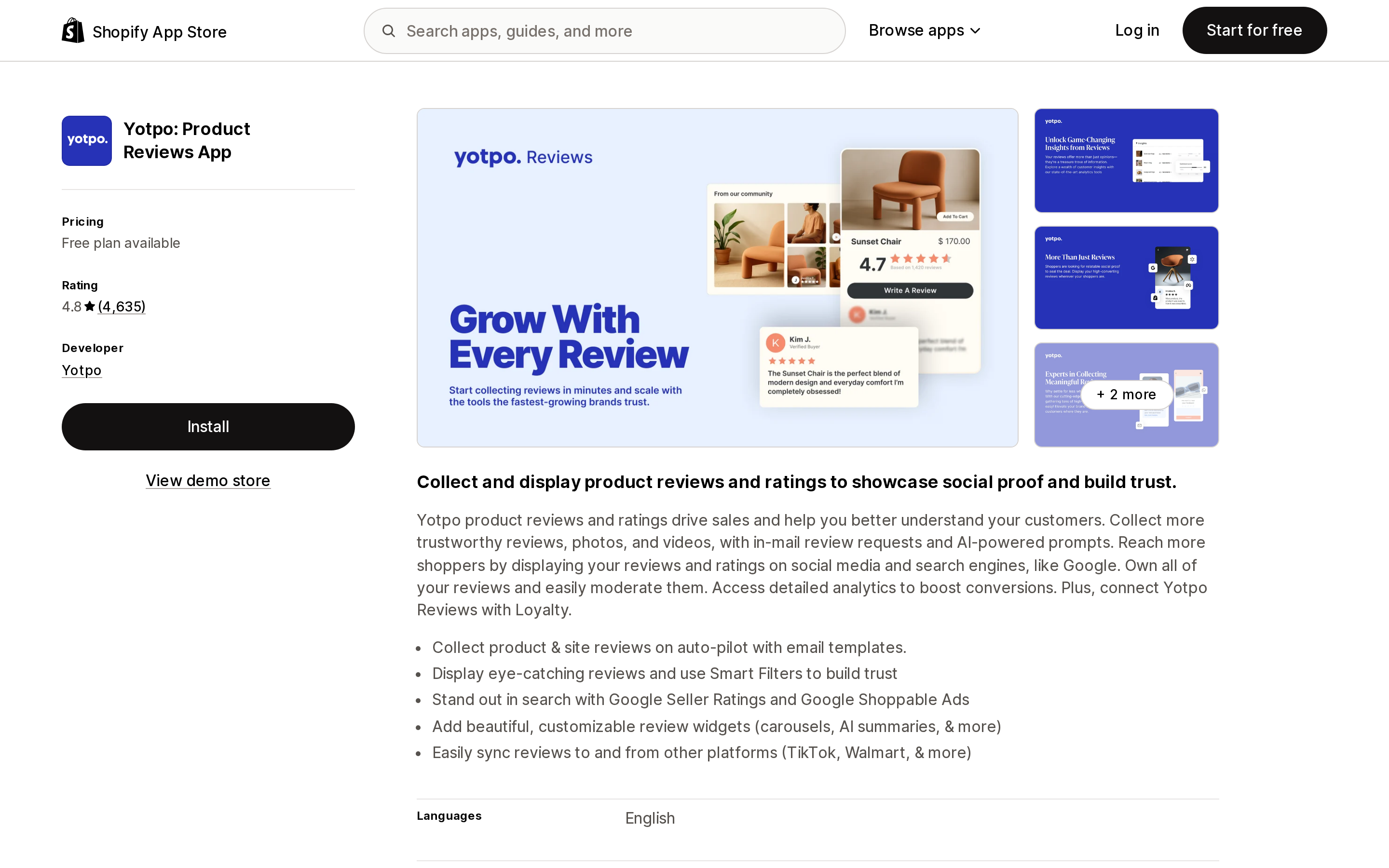
Source: Shopify App Store (Yotpo: Product Reviews App), retrieved September 11, 2026
Okendo states it in one line: "Any reviews flagged for manual review will remain pending for 14 days before also being automatically published."
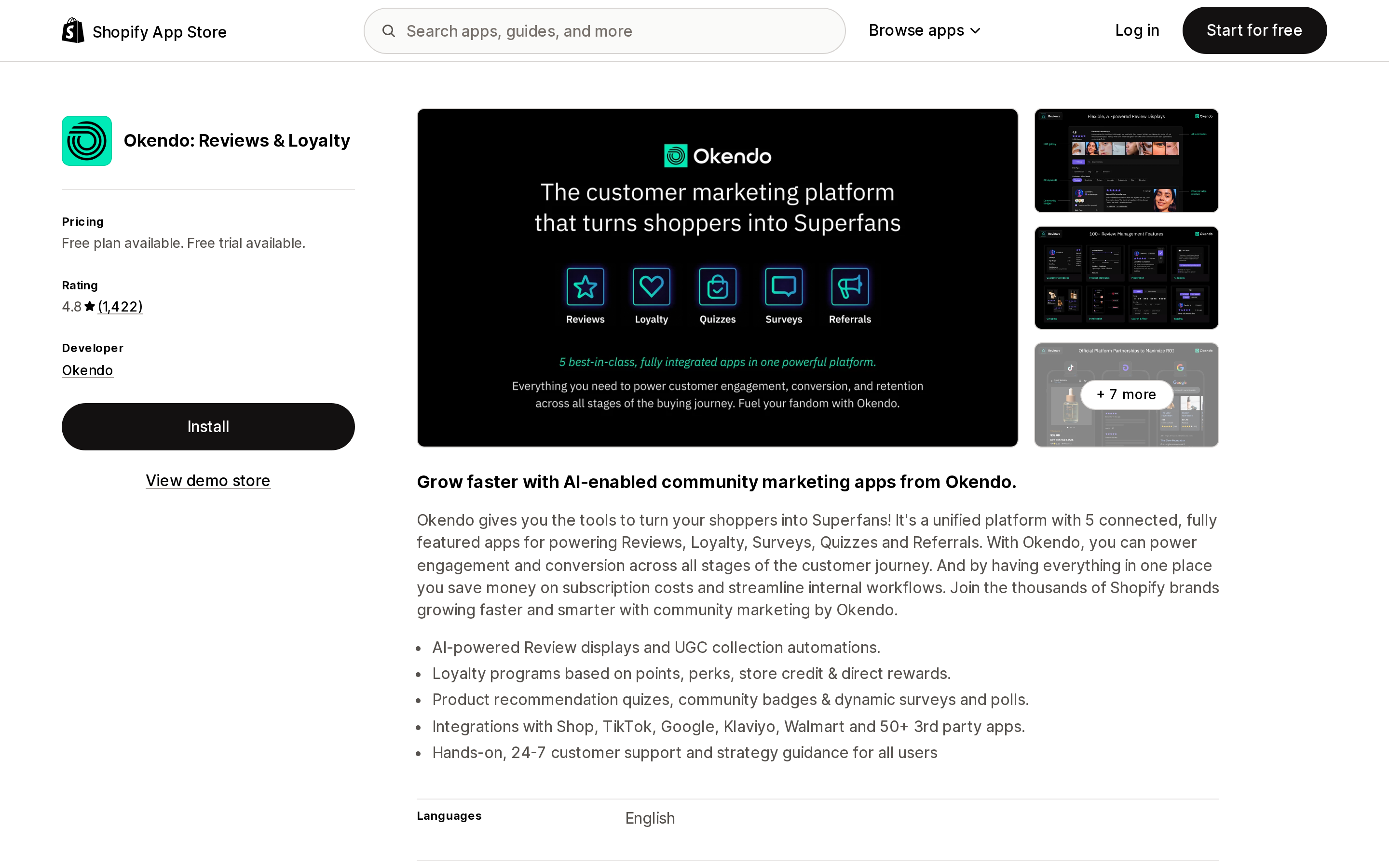
Source: Shopify App Store (Okendo: Reviews & Loyalty), retrieved September 11, 2026
Stamped.io is the outlier in how it describes itself. Its FTC guidance page says "We require all brands using auto-publish to auto-publish reviews regardless of star rating or sentiment." Its auto-publish help page then tells you to "Select the minimum star rating needed for verified reviews to be published automatically." Both are true once you read the timing: the star rating governs immediate publication only, and "14 days (including weekends) is the maximum delay permitted." Stamped adds a wrinkle the others don't: unverified reviews are never published immediately regardless of rating, and reviews left through the general Write-a-Review page "are never verified by design."
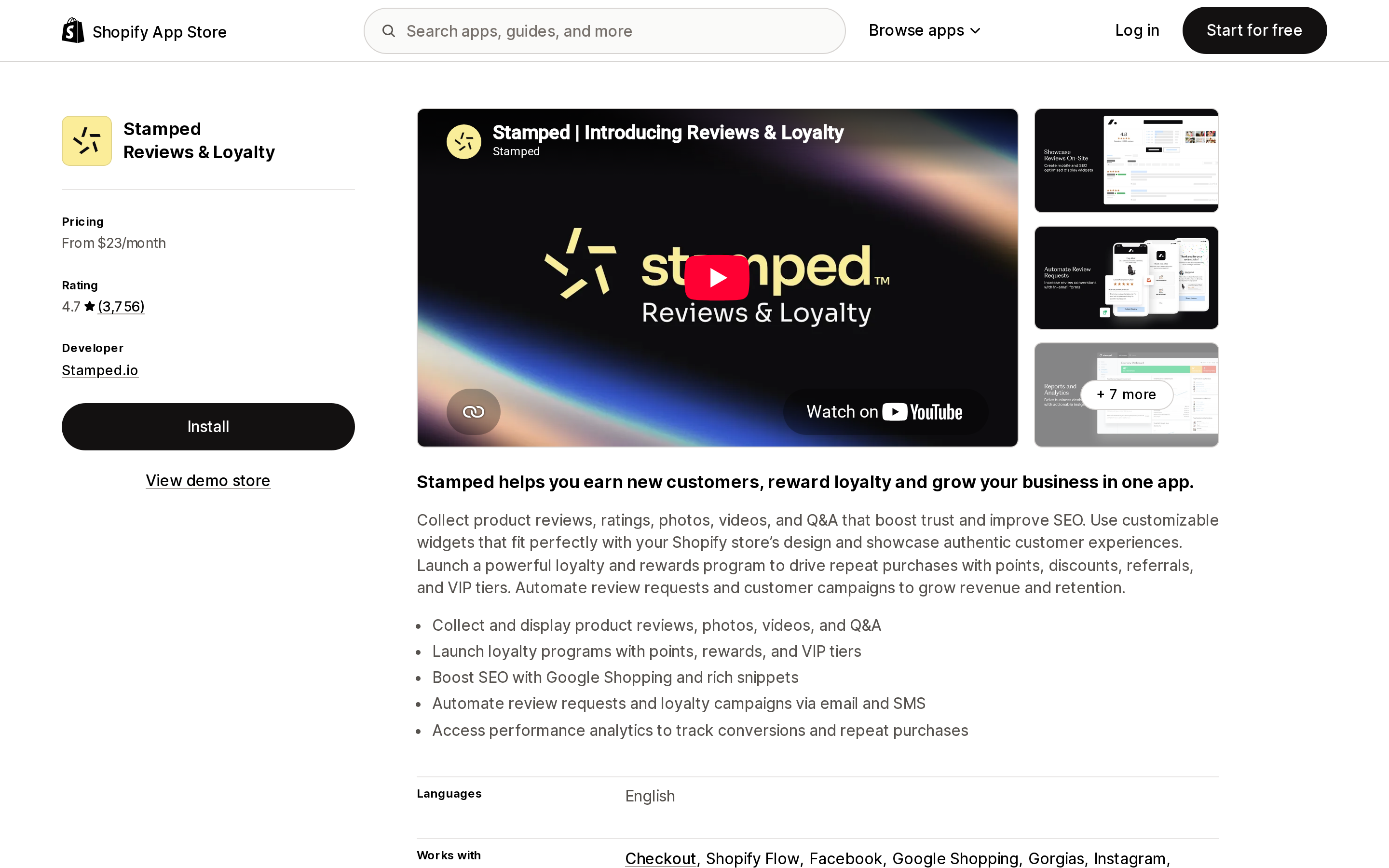
Source: Shopify App Store (Stamped Reviews & Loyalty), retrieved September 11, 2026
Nobody documents where the 14 days comes from. Judge.me attributes it to Shopify, Loox calls it required, Yotpo and Stamped implement it, Okendo restates it — and we could not find the window stated anywhere in the Shopify Help Center or on shopify.dev. The rule that decides whether your 1-star review appears is not written in any document addressed to you.
Hiding a review: the reason list is the compliance layer
Because rating filters expire, deliberate hiding is where a store actually diverges from what customers submitted — and all five apps have converged on the same design. You cannot hide a review without picking a reason from a fixed list.
Judge.me's list: Fake, Duplicated review, Spam, Unrelated to the product, Legal reasons, Inappropriate language, Foreign language, Contains private information, Other. It tells you why: "To align with review transparency policies and consumer protection laws, you need to select a reason from a predefined list." Loox's list runs to twelve entries — from harmful software and adult content through gibberish, conflict of interest and duplicate content — and Loox says it "keeps your store's moderation aligned with Google's review requirements." Okendo's help page simply restates § 465.7's carve-outs as its own criteria.
Compare those lists to § 465.7(b)(1)–(3) and most entries map cleanly. Two do not: Judge.me's "Foreign language" and "Other" have no counterpart in the regulation. And § 465.7(b) protects criteria "applied equally to all reviews submitted without regard to sentiment" — so a reason list is only a defense if you use it the same way on a 5-star review as on a 1-star one.
None of Judge.me, Loox or Stamped supports deleting a native review at all, and Okendo does not allow merchants to edit review content.
Three surfaces, three different answers
This is the part that catches people. Hiding a review does not hide it everywhere.
On your storefront, Judge.me is explicit: hidden reviews "are excluded from your product's average rating, review count, store overall rating, Star Rating Badge, and all rating-related metafields." Loox: an unpublished review "won't appear on your widgets or count towards your average product rating." Stamped: archiving "removes them from your widgets and your average rating."
In your Google Shopping feed, Judge.me states the opposite behavior: "Reviews from eligible sources are included in the Product Ratings feed for Google Shopping regardless of their status — published, pending, hidden, or archived." That is consistent with Google's requirement to send everything, and it means hiding a review to protect an on-site average changes nothing about what Google sees.
In Shop, the direction reverses again. Shopify displays "eligible published partner-collected reviews," and warns the Shop count "might be less than the number of reviews displayed in your partner app admin." Judge.me notes that reviews synced from the Shop app publish "regardless of your auto-publish criteria" and "can't be hidden, archived, or deleted individually or in bulk" — a point Stamped repeats for its own integration. Shopify's eligibility rules subtract further: a partner-app review needs a Customer ID, Order ID and Product ID, non-English language codes are excluded, and reviews migrated between apps by CSV are permanently ineligible. (That last one decides most migrations; we covered it in what transfers when you switch review apps.)
Disclosure is a checkbox, and nobody says it is on
If you do run incentives, the FTC's warning about disclosure and Google's is_incentivized_review attribute both require that the reward be visible. In these apps, that visibility is a setting.
Judge.me's transparency badges are individual checkboxes, including "Review earned a reward for a future purchase." The condition is stated directly: "If you enable the Review earned a reward for future purchase badge in the Review Widget: Reviews that are qualified for a coupon code will be automatically marked as incentivized." Enable it and the labelling is automatic; leave it unchecked and incentivized reviews look like any other.
Loox's Transparency settings work the same way, with separate toggles for imported reviews, store-visitor reviews, purchase date, verified status, and a "Rewarded" badge for photo or video reviews that earned a future-purchase discount. Okendo and Stamped both document incentivized-review badges as available features. None of the five help pages we read states which of these disclosures is enabled by default on a new install.
Okendo adds one line worth copying regardless of which app you use. It says it "does not discriminate or use any sort of predictive filtering when sending review requests," and names the anti-pattern: "segmenting review requests based on customer profile data such as prior review ratings, prior review sentiment, NPS, etc." That is the practice FTC staff flagged as outside the rule but potentially a Section 5 problem — and it usually lives in your email platform, not your review app.
What to do before the next review request goes out
- Read your app's rating threshold as what it is: a moderation queue with a 14-day timer. If nobody works that queue, the threshold changes only when reviews appear, not whether.
- Check the wording of the request. "Leave a review and get 10% off" is fine under § 465.4. "Tell us what you loved and get 10% off" is not.
- Turn on the incentivized-review badge before you turn on the coupons. The disclosure obligation attaches to the reviews you are collecting now.
- Decide whether you want to be in Shop at all. Shop's guidelines prohibit compensation for reviews with no exceptions, so a paid-review program syndicated to Shop puts the two in direct conflict. Judge.me, Loox and Stamped all expose a Shop syndication toggle.
- Audit your hidden reviews quarterly and confirm you would have hidden a 5-star review for the same reason. And remember that in Google Product Ratings the feed is the complete record — hiding on-site does not remove anything from it.
Who each app suits
Judge.me documents its own moderation mechanics more completely than the others — statuses, what hiding subtracts from, what still syndicates — which makes it the easiest to audit. The rating and sentiment filters sit behind the $15 Awesome plan, as does Google Shopping syndication.
Loox has the largest free order allowance (500) and the most granular transparency toggles, but it is also the app that pairs a free discount-for-review engine with free Shop syndication. If you use both, do so deliberately.
Okendo publishes the clearest written position on request-side filtering and restates the regulation rather than paraphrasing it. Its Free plan stops at 50 orders a month, so most stores land on Essential at $19 or Growth at $119.
Stamped.io takes the strongest stance — auto-publish regardless of rating or sentiment — but its verification gate means unverified reviews never publish immediately, which can look like suppression to the customer who left one. No free plan; entry is $23/month at 200 orders.
Yotpo has the sentiment filter most likely to be switched on by accident. It also allows a combination worth a second look: the discount email can be sent after a review is published rather than after it is submitted, while a separate setting raises the minimum star rating for publication. Enabled together, the reward reaches only reviewers whose rating cleared the threshold — the shape § 465.4 describes as conditioning by implication. Whether a given configuration crosses that line is a question for counsel, not a settings page.
None of this is a ranking. If you already have one installed, the useful move is not switching apps — it is opening the three screens named above and finding out what your current settings are.
Sources
- 16 CFR Part 465 — Rule on the Use of Consumer Reviews and Testimonials (eCFR)
- The Consumer Reviews and Testimonials Rule: Questions and Answers (FTC)
- FTC Publishes Inflation-Adjusted Civil Penalty Amounts for 2025 (FTC)
- Product Ratings policies (Google Merchant Center Help)
- Shop product reviews guidelines and requirements (Shopify Help Center)
- Syncing Shop product reviews with partner apps (Shopify Help Center)
- Standard product review metaobject definition (shopify.dev)
- Publishing and hiding reviews and Review transparency badges (Judge.me Help Center)
- Managing Reviews and Review Transparency (Loox Help Center)
- FTC rules regarding reviews and testimonials (Okendo Help Center)
- Complying with the FTC Final Rule for Reviews, Auto Publish/Publishing Reviews and Coupons & Discount Codes (Stamped Help Center)
- Auto-Publishing Reviews and Offering a Discount for Writing or Sharing a Review (Yotpo Support)
Shopify's free link-in-bio page, Linkpop, retired on July 7, 2025 — linkpop.com now redirects to shopify.com. On August 15, 2026 Shopify's Help Center began saying the $5 Starter plan, the plan built around sharing product links on social, isn't available to new stores. And Shopify's own July 21, 2026 blog post on link-in-bio tools links to exactly two Shopify App Store listings: LinkShop, and Linktree — an app in the Marketplaces category, billed outside your Shopify invoice, rated 3.6 across 18 reviews. We priced seven link-in-bio apps on September 18, 2026. The dimension that matters isn't the monthly fee, which runs from $0 to $15. It's where the page lives: four apps serve it from your own storefront through a Shopify app proxy, which means it sits behind your store password — and on the new $0 Agentic plan, that password never comes off. Verified against the Shopify Help Center, shopify.dev, the Shopify App Store, and live store pages.