
What you will learn
On this pageContentsCloseOpen
If your subscriber list has more than 1,000 people on it, Shopify has probably already started hiding some of them from your campaigns — without you asking it to. A setting called Smart delivery, shipped to Shopify Messaging on June 17, 2026, is turned on by default and quietly excludes unengaged subscribers from every send. Most merchants have never opened the setting that controls it.
This isn't the same thing as Klaviyo's "Smart Sending" or Omnisend's "Send Time Optimization," even though the names sound interchangeable. Each does something different, and confusing them leads to the wrong conclusion about whether you still need a paid email platform. This article breaks down exactly what Shopify's native filtering does, what it doesn't do, and where Klaviyo and Omnisend still cover gaps it leaves open.
What Smart delivery actually does
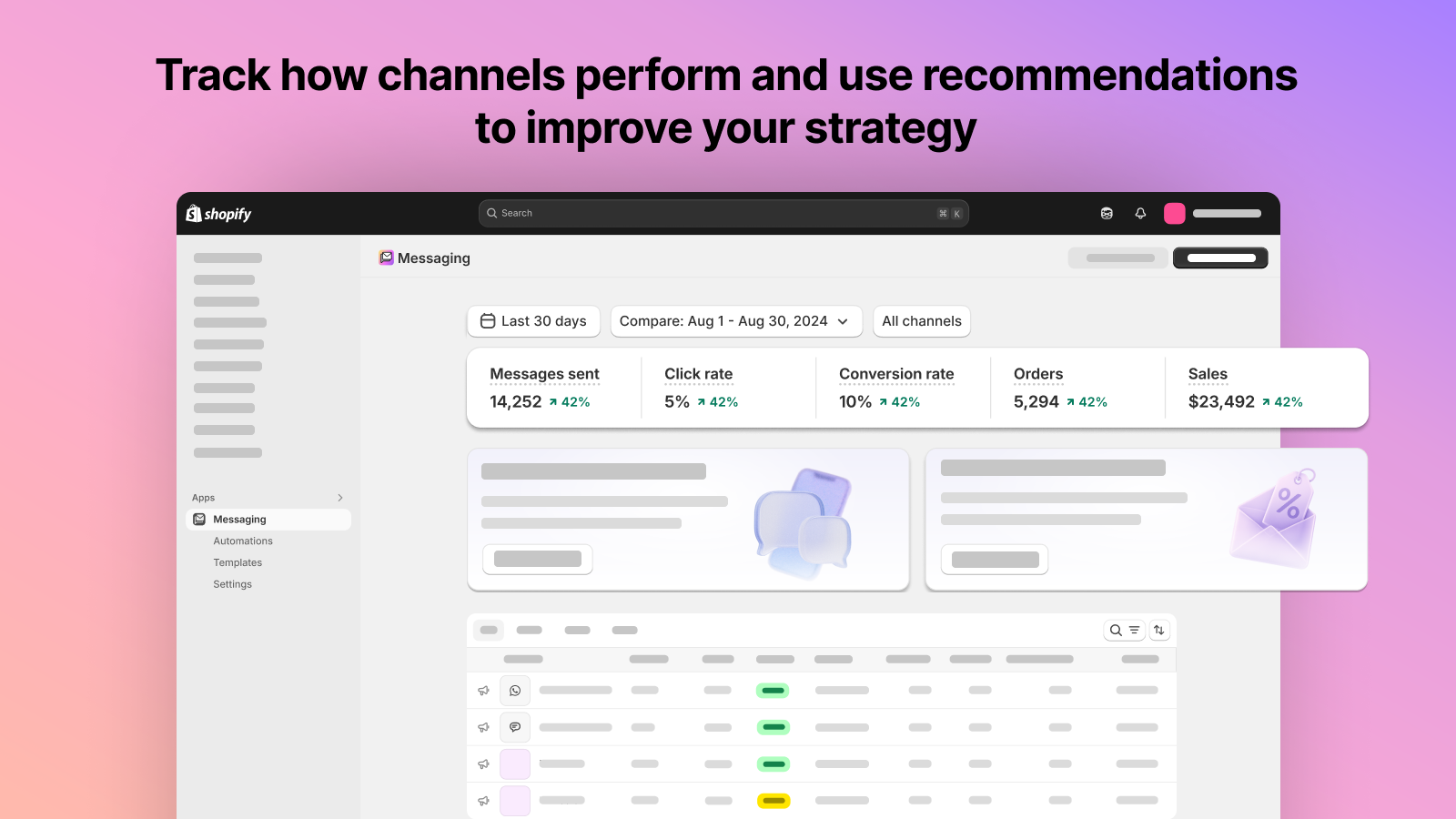
According to the Shopify Help Center, Smart delivery is a built-in setting inside the Shopify Messaging app (the app formerly known as Shopify Email) that "filters your campaign audience so that your message is sent only to engaged subscribers." Shopify's own example: a customer who hasn't opened your recent marketing emails, or an SMS subscriber with an inactive phone number, gets excluded from that specific campaign's send list.
Source: Shopify App Store (Shopify Messaging), retrieved September 4, 2026
Three mechanics matter here, and the Help Center is specific about all three:
- It's on by default. Shopify didn't ship this as an opt-in feature. Every store already has it running unless someone has gone into Messaging settings and turned it off.
- It only activates above 1,000 subscribers. If the customer segment you're sending to has 1,000 subscribers or fewer, Shopify sends to the full list regardless of whether Smart delivery is toggled on. The filtering logic only kicks in once a single send's audience crosses that threshold.
- It's visible, but only at send time. A "Smart delivery is on" banner appears in the campaign editor before you hit send. Shopify doesn't document a report showing exactly which subscribers were excluded from a given campaign after the fact.
Smart delivery isn't the only delivery-protection setting in Shopify Messaging. Two others — Bot filtering (removes bot-generated subscribers before each send) and List health (removes subscribers who've bounced, unsubscribed, or filed a spam complaint) — are always active and, per the Help Center, "can't be turned off." Smart delivery is the only one of the three you can disable, and turning it off triggers a confirmation dialog warning that doing so "can increase bounce rates, spam complaints, and costs over time."
Why Shopify built this now
The context is Shopify's own definition of deliverability, laid out on the same Help Center page: delivery is whether a message is accepted by a mail server or carrier at all, while deliverability is whether it lands in the inbox instead of spam — and that's shaped by sender reputation, which providers build from open rates, click rates, bounce rates, and spam complaints over time. Sending to people who never open your emails doesn't just waste sends; on Shopify's usage-based pricing, it costs money and drags down the reputation signal that determines whether your next campaign reaches anyone's inbox at all.
That pricing context matters for the decision, too. Shopify Messaging includes 10,000 free emails per month, shared across all campaigns sent in a calendar month, then $1 per 1,000 additional emails up to 300,000, dropping to $0.65 per 1,000 up to 750,000, and $0.55 per 1,000 beyond that. Abandoned-checkout automations are always free and don't count against the monthly limit. Filtering out subscribers who never open anything directly reduces what a store pays, on top of protecting deliverability.
How this compares to Klaviyo's Smart Sending
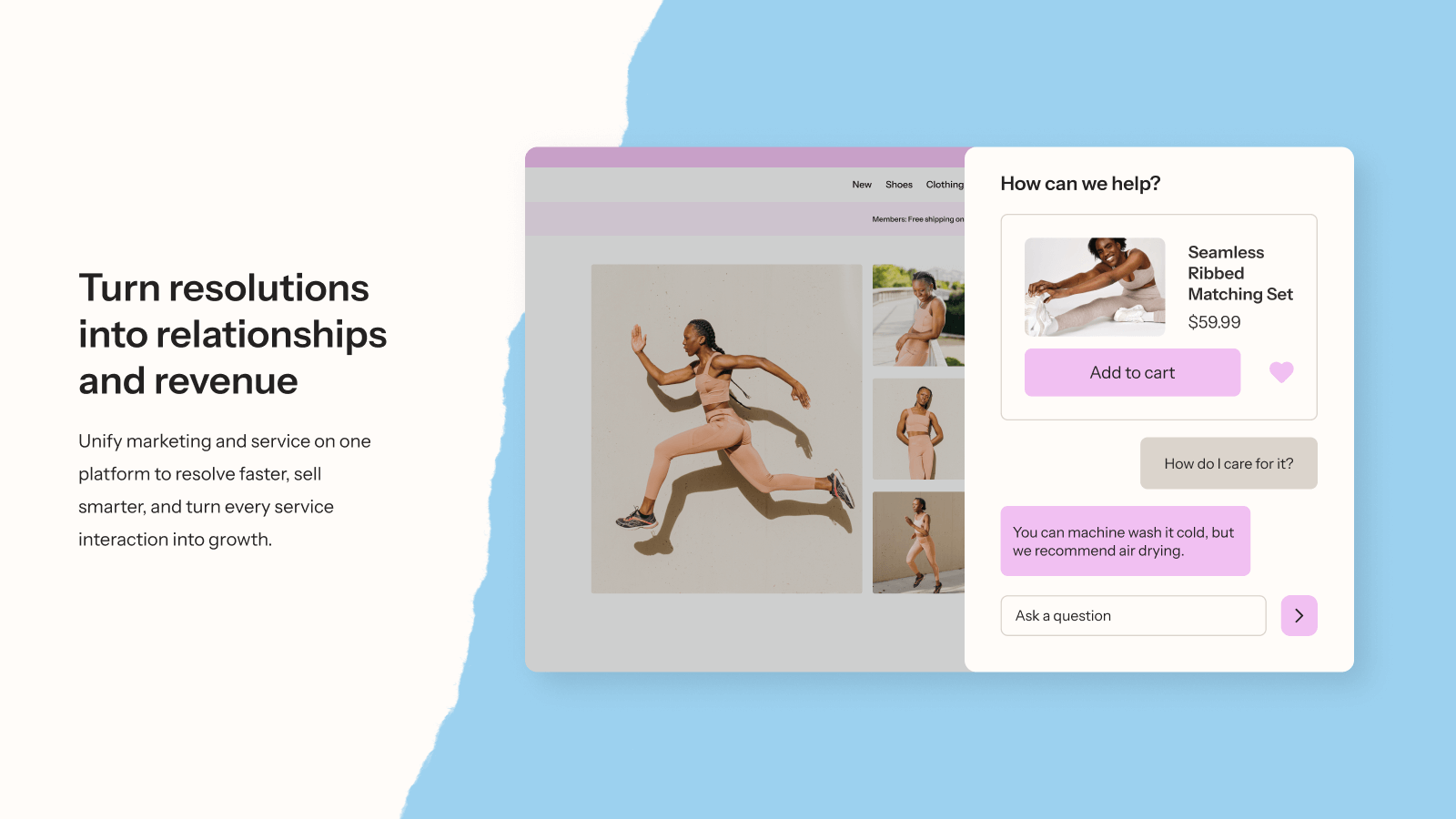
The name overlap with Klaviyo: Email Marketing & SMS's "Smart Sending" feature is where a lot of merchants get confused, so it's worth being precise. Per Klaviyo's own Help Center, Smart Sending "allows you to limit the number of emails, SMS messages, or push notifications someone can receive within a set period of time" — it's a frequency cap, not an engagement filter. It stops someone from getting three campaigns in one day because several flows fired at once; it does not look at whether that person has opened anything in the last three months. Each channel has its own separate Smart Sending window, and changing the window doesn't retroactively affect people already scheduled to receive a message.
Source: Shopify App Store (Klaviyo: Email Marketing & SMS), retrieved September 4, 2026
Klaviyo does have automatic suppression, but it isn't triggered by low engagement the way Shopify's is. Per Klaviyo's Help Center, Klaviyo automatically suppresses a profile only for a hard bounce, more than 7 consecutive soft bounces, or a spam complaint (plus manual suppression a merchant applies directly). A profile that simply never opens or clicks — but hasn't bounced or complained — stays fully eligible for every send unless a merchant deliberately builds a suppression segment or "sunset flow" for inactivity. That's a documented best practice in Klaviyo's own help content, but it's opt-in work a merchant has to set up, not a default that's already protecting every campaign the day the app is installed.
Klaviyo's pricing is built around active profiles rather than emails sent. The free plan covers up to 250 profiles, 500 emails a month, and 150 mobile messaging credits. The Email plan starts at $20/month for the 251–500 active profile tier, including 5,000 emails a month; Email+SMS starts at $35/month for the same profile tier, adding 1,250 SMS/MMS credits. Because billing scales with list size rather than volume sent, a store that never prunes its list pays more every month regardless of whether Smart Sending or manual suppression is in use — which is a structurally different incentive than Shopify Messaging's pay-per-send model.
How this compares to Omnisend's Send Time Optimization
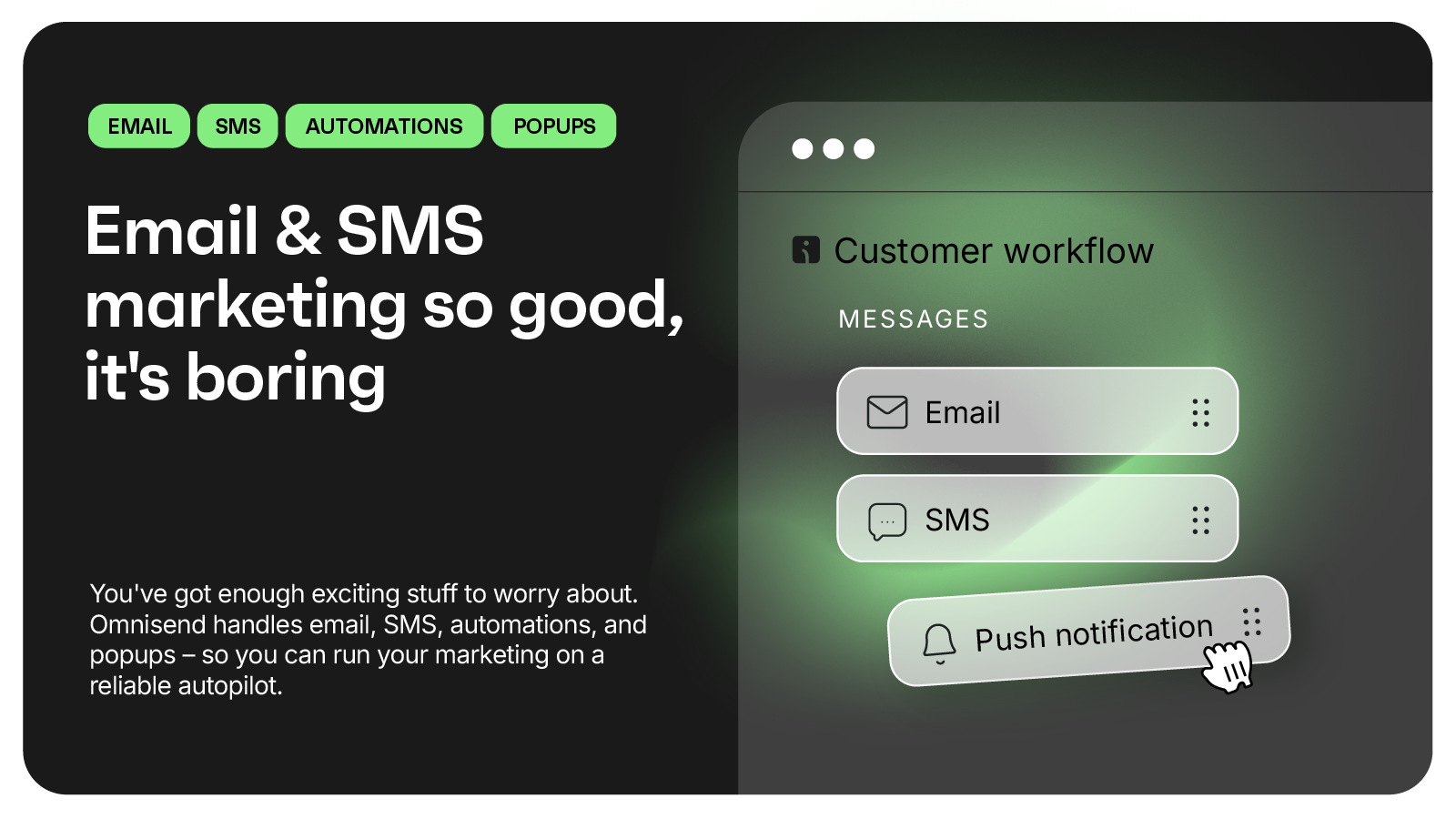
Omnisend Email Marketing & SMS has its own feature that sounds adjacent: Send Time Optimization (STO). Per Omnisend, STO analyzes a contact's historical engagement to predict when they're individually most likely to open an email, and lets a merchant choose whether it optimizes for opens, clicks, or placed orders. Contacts without enough individual history fall back to a brand-level send-time pattern, and every email still goes out within 24 hours of the scheduled date.
Source: Shopify App Store (Omnisend Email Marketing & SMS), retrieved September 4, 2026
STO answers when to send to a given contact — it doesn't decide whether that contact should be excluded for being unengaged. That's a meaningfully different job from what Shopify's Smart delivery does. It's also not free at every tier: Omnisend's Free plan covers 250 contacts and 500 emails a month; the Standard plan starts at $16/month, where STO is a separate paid add-on; the Pro plan starts at $59/month and includes STO along with unlimited email sends and priority support.
The comparison that actually matters
| Shopify Messaging Smart delivery | Klaviyo Smart Sending | Omnisend Send Time Optimization | |
|---|---|---|---|
| What it decides | Whether to include a subscriber in this send | How often one person can be messaged | When to message one person |
| Default state | On by default, all stores | Off; merchant configures a window | Not applicable on Free/Standard without add-on |
| Basis for filtering | Recent engagement (opens/clicks), inactive phone numbers | Time since last message, not engagement | Predicted best open time from history |
| Cost | Included, no extra charge | Included in Email/Email+SMS plans | Included only on Pro ($59/month+); paid add-on on Standard |
| Minimum list size to activate | Over 1,000 subscribers in the send | No minimum | No minimum |
| Can you see who was excluded | Banner only, no documented per-send report | Full segment visibility (merchant builds the logic) | Not applicable — everyone still gets sent to, just at different times |
The practical takeaway: Shopify's Smart delivery and Klaviyo's Smart Sending are not competing solutions to the same problem, despite the similar names. Shopify is doing, automatically and for free, something Klaviyo expects a merchant to build manually through a sunset flow. Omnisend's STO is solving a third, unrelated problem — timing, not inclusion.
Who should keep Smart delivery on, and who still needs more
Stores with over 1,000 subscribers using Shopify Messaging as their only marketing tool get real, no-setup value from Smart delivery. It's already reducing bounce and complaint exposure without anyone touching a setting, and it's included in the same pay-per-send pricing the store is already on.
Stores with 1,000 or fewer subscribers shouldn't expect Smart delivery to do anything — per Shopify's own documentation, the audience isn't filtered at all below that threshold. Bot filtering and List health still apply regardless of list size, since those two can't be turned off, but the engagement-based filtering doesn't engage.
Stores running Klaviyo or Omnisend already have a different job to do. Neither platform replicates Shopify's automatic engagement suppression out of the box. If a Klaviyo or Omnisend account has never had a sunset flow or engagement-based suppression segment built, unengaged contacts are likely still being emailed on every send — the equivalent of running Shopify Messaging with Smart delivery manually switched off. That's worth auditing directly, since it affects both deliverability and, in Klaviyo's case, the active-profile count driving monthly billing.
Stores that need cross-channel frequency capping, predictive send-time targeting, or revenue-attributed flow automation still have a reason to run Klaviyo or Omnisend alongside or instead of Shopify Messaging — those are capabilities Shopify's native tool doesn't offer at all. Smart delivery only ever decides whether to skip someone on a given send; it isn't a segmentation, personalization, or automation platform.
The bottom line
Shopify Messaging's Smart delivery is a genuinely useful default, and it's easy to overlook precisely because it requires no setup. But "smart" delivery, "smart" sending, and send-time "optimization" are three different mechanisms solving three different problems, and none of the three vendor names make that obvious. Before deciding a paid ESP is redundant with what Shopify now does automatically, or assuming Klaviyo/Omnisend already handle engagement-based suppression the same way, check the actual mechanic — not just the label.
Sources:
- Smart delivery in Shopify Messaging — Shopify Changelog
- Optimizing your marketing campaign delivery and deliverability — Shopify Help Center
- Shopify Messaging email pricing — Shopify Help Center
- Understanding Smart Sending in Klaviyo — Klaviyo Help Center
- Understanding suppressed email profiles — Klaviyo Help Center
- Klaviyo Pricing
- Omnisend Pricing Plans 2026 — Omnisend Help Center
Shopify's free link-in-bio page, Linkpop, retired on July 7, 2025 — linkpop.com now redirects to shopify.com. On August 15, 2026 Shopify's Help Center began saying the $5 Starter plan, the plan built around sharing product links on social, isn't available to new stores. And Shopify's own July 21, 2026 blog post on link-in-bio tools links to exactly two Shopify App Store listings: LinkShop, and Linktree — an app in the Marketplaces category, billed outside your Shopify invoice, rated 3.6 across 18 reviews. We priced seven link-in-bio apps on September 18, 2026. The dimension that matters isn't the monthly fee, which runs from $0 to $15. It's where the page lives: four apps serve it from your own storefront through a Shopify app proxy, which means it sits behind your store password — and on the new $0 Agentic plan, that password never comes off. Verified against the Shopify Help Center, shopify.dev, the Shopify App Store, and live store pages.